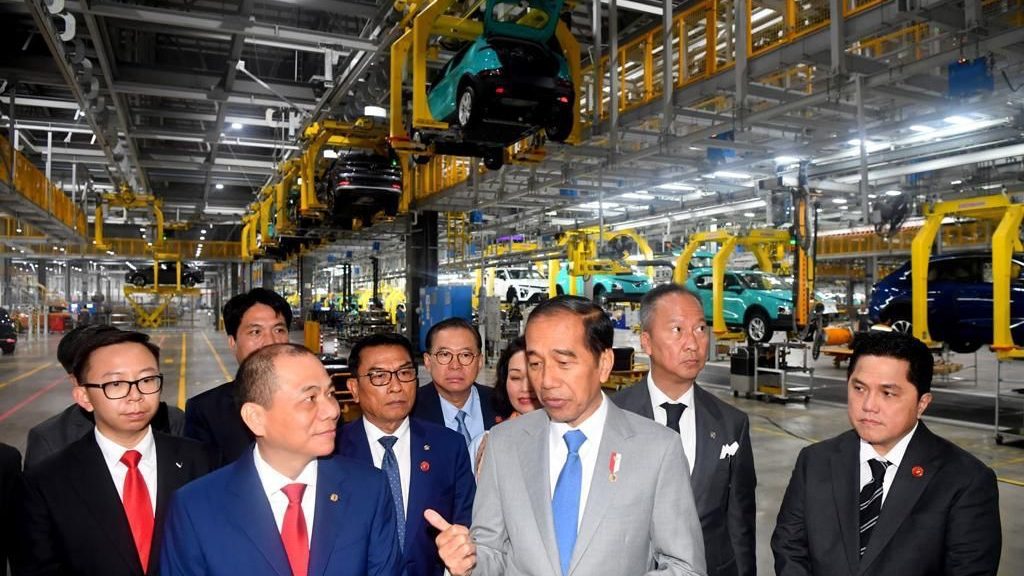
A father just handed his son control of a multi-billion-dollar automaker, and almost everyone covering it is asking the wrong question. The question is not whether Pham Nhat Quan Anh is ready to run VinFast. The question is why this transition matters so little to the people who actually own the stock, and so much to the people who don't.
Pham Nhat Quan Anh, chairman of VinFast Auto Ltd., will take over as global chief executive officer of the Vietnamese electric-vehicle maker, replacing his father and billionaire founder Pham Nhat Vuong amid an aggressive international push and growing losses. Quan Anh was appointed chairman of VinFast in May and will now assume overall responsibility for the automaker's global operations, according to a statement from parent company Vingroup. He continues to run the Vietnam operating business, so nothing about the domestic power base has moved. What has moved is the title that faces the rest of the world.
The mechanism most coverage is missing
VinFast listed on Nasdaq through a SPAC merger, and its market capitalization has traded around the high single-digit billions this year. But ownership concentration in this name is extreme. Vingroup and the Pham family control the overwhelming majority of shares outstanding, which leaves a genuinely thin public float trading against a company with a far larger private ownership base sitting behind it.
That structure changes what a CEO announcement even means. In a normal listed company, a leadership change is information the market has to digest: board dynamics, succession risk, investor confidence. Here, the board is the family. The succession decision was made before any public shareholder had a vote that could move it. The stock does not reprice the governance decision. It reprices sentiment around the decision, which is a different thing entirely.
This is why the transmission mechanism for VinFast news rarely runs through the equity in the way it would for a widely held company. It runs through headlines, retail flow chasing an EV growth story, and occasionally through credit markets tied to Vingroup itself. The equity float is the least informative place to look for what this move actually costs or delivers.
The second-order effect nobody is pricing
Here is the part that gets skipped. VinFast has continued to post significant losses while pushing into new markets including Indonesia, the Philippines, India and parts of Europe and the Middle East, funded in large part by capital support from Vingroup and personal commitments from the founder himself. That funding relationship is the actual balance sheet that matters, and it is not visible on the Nasdaq ticker.
A generational handover at the CEO level is, underneath the family narrative, a succession plan for who controls the flow of related-party capital that keeps an unprofitable global expansion funded. Lenders, suppliers and joint-venture partners in each new market care enormously about whether the person authorizing the next capital injection has the same standing and credibility as the person before him. That is a credit and counterparty question. It is almost never framed that way in coverage built around a family story, and it is the part with real consequences if expansion outpaces the willingness or ability of the parent group to keep writing checks.
The honest counter-case
None of this means the move is empty. Installing a chairman as CEO ahead of a major international push can genuinely tighten decision-making, particularly if the new CEO consolidates operational authority that was previously split across regional structures. If Quan Anh proves capable of cutting cash burn per vehicle or securing durable distribution outside Vietnam, that would be a real operating improvement, not just a family reshuffle, and it would eventually show up in unit economics regardless of how thin the float is. The counter-case rests entirely on execution nobody has demonstrated yet.
What I am watching next
I am watching cash burn trends against delivery volumes in the newer expansion markets, and whether Vingroup's own funding commitments to VinFast change in size or terms following this transition. I am also watching whether VinFast's public float ever widens meaningfully, because until it does, the stock price is a sentiment indicator layered on top of a private company, not a clean read on the business itself.
Running a market-neutral book, a name like this is nearly impossible to express cleanly through the listed equity or its options, because the float and open interest are too thin to size a position without becoming the market yourself. The more honest way to hold a view on VinFast right now is through the credit and related-party funding chain around Vingroup, not the Nasdaq ticker everyone is watching.
If a family conglomerate can move the CEO of a global automaker without a single public shareholder vote mattering, what exactly is the stock price telling you, and what is it not?
This is Komey Tetteh. General information and market commentary only. Nothing here is financial advice.
Common questions
Who is the new CEO of VinFast?
Pham Nhat Quan Anh, the eldest son of VinFast founder Pham Nhat Vuong, has taken over as global chief executive officer of VinFast Auto Ltd. He was appointed chairman of the company in May 2026 and has now assumed the top operating role as well.
Why did Pham Nhat Vuong step down as VinFast CEO?
The transition was announced by parent company Vingroup as part of an aggressive international expansion push, and it comes while VinFast continues to report substantial losses. No public reason beyond succession and expansion strategy has been given by the company.
Is VinFast stock (VFS) a good indicator of the company's real value?
VinFast trades on Nasdaq under the ticker VFS, but the vast majority of its shares are held by Vingroup and the Pham family rather than public investors. That concentration means the traded price reflects a very small slice of total ownership, which limits how much the stock price alone tells you about the underlying business.
How is VinFast funded if it keeps losing money?
VinFast has historically relied on capital support from its parent Vingroup and from personal commitments by founder Pham Nhat Vuong, in addition to public capital markets. The company has reported significant annual net losses in its recent history as it scales manufacturing and expands into new markets.
What does the VinFast succession mean for investors?
This is general market commentary, not investment advice. The leadership change is a governance and structural development worth watching alongside VinFast's cash burn, delivery volumes in new markets, and continued reliance on related-party funding, rather than a signal about where the stock price is headed.