
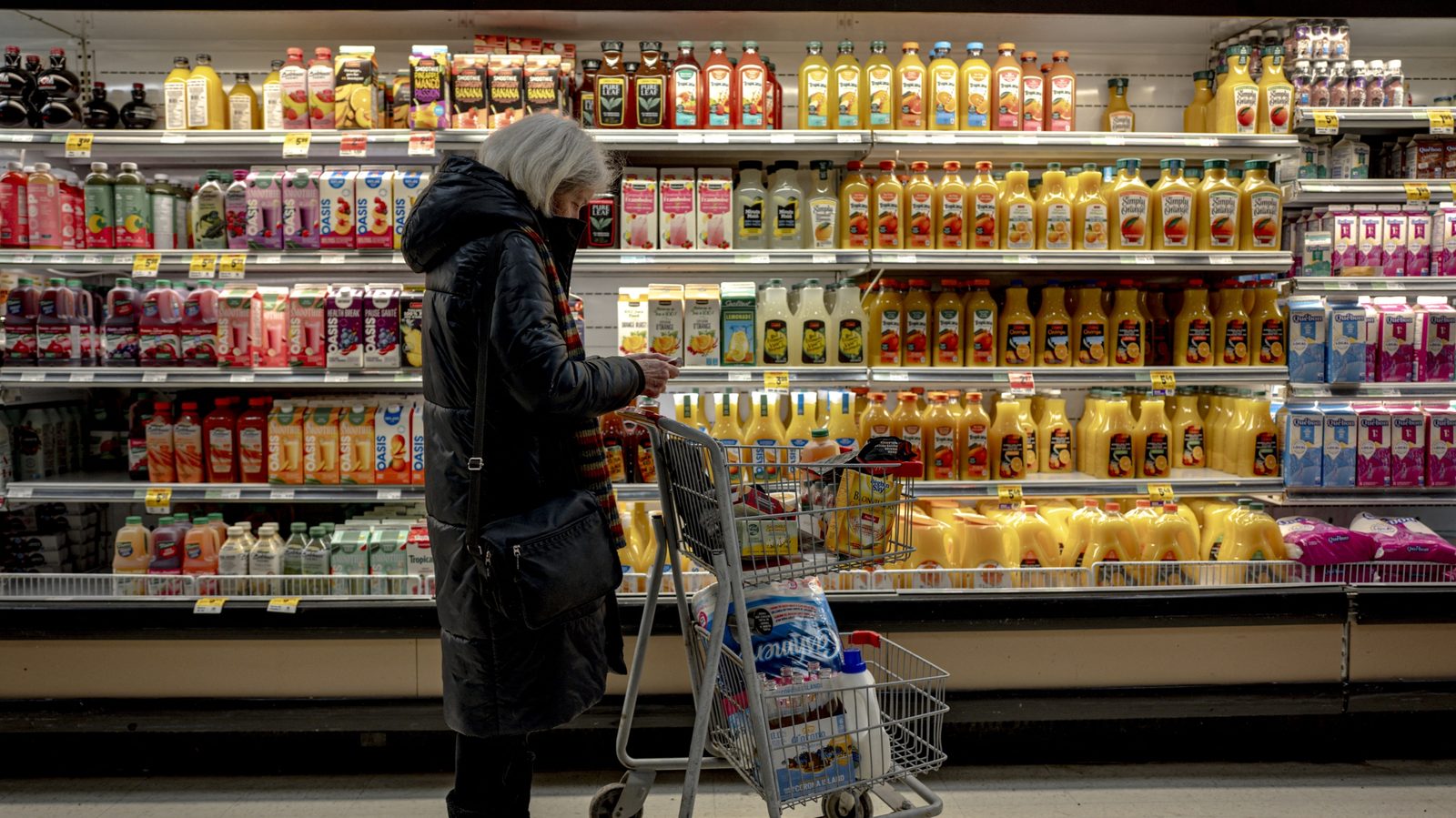
When three-quarters of voters tell pollsters they are actively tracking a bilateral trade dispute through the lens of their weekly grocery run, that is not a consumer sentiment data point. That is a political pressure gauge with a hair trigger, and political pressure gauges with hair triggers move policy in ways that unsettle supply chains for years. The U.S.-Canada trade war, framed in headlines as a tariff spat between neighbors, is quietly dismantling a $42 billion cross-border food and agricultural trade relationship that both economies spent five decades building. The second and third-order consequences, rising input costs for U.S. food manufacturers, a weakening Canadian dollar amplifying retaliatory purchasing power, and the structural repricing of agricultural commodity volatility, are not yet in consensus models. They will be.
The $42 Billion Relationship Markets Are Underweighting
Canada is the United States' largest agricultural trading partner by volume, absorbing roughly $28 billion in U.S. farm exports annually while sending approximately $42 billion in food and agri-products southward, everything from canola oil and potash to fresh produce and processed dairy. When tariffs entered this corridor, they did not simply raise prices at the margin. They disrupted procurement contracts that major U.S. food manufacturers, companies like Kraft Heinz, Conagra, and TreeHouse Foods, had structured around predictable cross-border input costs. Input cost uncertainty of even 8 to 12 percent on key commodities forces procurement teams to either absorb margin compression or front-run inventory, both of which distort working capital cycles and suppress free cash flow in ways that equity multiples have not yet discounted.
Potash is the clearest example of a pressure point that the grocery-bill narrative obscures. Saskatchewan supplies approximately 35 percent of global potash exports, and Canada controls nearly 30 percent of world reserves. U.S. farmers depend on Canadian potash to fertilize roughly 80 percent of domestically grown corn and soybeans. Any retaliatory measure that meaningfully disrupts potash flows does not raise grocery bills next quarter. It raises them in 18 to 24 months, after the next planting season absorbs higher fertilizer costs and passes them forward through the food production chain. That lag is precisely where markets consistently misprice agricultural trade shocks.
When three-quarters of voters track a trade dispute through their grocery receipt, the political conditions for quiet resolution disappear. The dispute does not end; it institutionalizes. And institutionalized trade friction is the kind that supply chains, equity multiples, and volatility surfaces consistently underprice until it is too late.
The Canadian Dollar Channel and Its Quiet Amplification Effect
The Canadian dollar has depreciated roughly 6.8 percent against the U.S. dollar since tariff escalation began in earnest. For Canadian exporters, that currency move is a partial natural hedge, it softens the sting of U.S. tariffs by making Canadian goods cheaper in USD terms even after the levy. But for U.S. import-competing industries and the Federal Reserve's inflation modeling desk, the dynamic runs the other direction. A weaker loonie means Canadian goods can sustain tariffs and still undercut domestic U.S. producers on price in certain categories, particularly in softwood lumber, dairy inputs, and certain processed foods. The tariffs, designed to protect American industry, are being partially neutralized by the very currency pressure they created, a classic second-order irony that trade hawks in Washington have historically underestimated.
For macro traders, the CAD/USD cross is now functioning as a real-time tariff thermometer. Every escalation in trade rhetoric weakens the loonie, which paradoxically softens the inflationary pass-through that U.S. consumers feel at the register, even as it prolongs the underlying structural damage to both supply chains. The Bank of Canada is watching this closely. If currency weakness accelerates to the point where imported inflation from other trading partners offsets the trade-war deflation benefit, the Bank faces a stagflationary bind that forces a hold even as growth softens. Canadian rate expectations pricing a cut cycle through 2025 may be pricing in assumptions that break down under sustained trade pressure.
Which Sectors Reprice and in Which Direction
The equity sectors with the most asymmetric exposure are not the ones making headlines. Specialty agricultural retailers and farm input distributors, companies operating in the Nutrien and CF Industries supply orbit, face simultaneous tailwinds from fertilizer price appreciation and headwinds from demand destruction if U.S. farmers reduce planted acreage in response to margin pressure. That is a sector where implied volatility in options markets has not yet begun to reflect the binary outcome range. Meanwhile, the large-cap U.S. grocery chains, Kroger, Albertsons, and Costco, face a more complex repricing. Their private-label sourcing networks are deeply integrated with Canadian processors, and supply disruption at the input layer threatens the gross margin expansion story that several of these names have built their current valuations around.
On the short side, Canadian integrated food companies with heavy U.S. revenue exposure, such as Saputo and Maple Leaf Foods, are caught in a particularly unfavorable position. They face tariff-suppressed revenue in their largest market while their cost base in Canadian dollars is being eroded by a weakening currency on the import side of their own supply chains. For U.S.-listed agricultural ETFs like CORN, WEAT, and the broader DBA, the trade war injects a persistent basis risk between futures pricing and spot physical market realities that historically widens realized volatility well above implied volatility, creating a structural mispricing that delta-neutral strategies are designed to exploit.
The Political Feedback Loop That Makes This Durable
The 75 percent voter awareness statistic is not a curiosity. It is a structural constraint on resolution. Trade disputes where the general public can directly feel the cost in a weekly, unavoidable purchase, groceries, are qualitatively different from disputes felt only by specific industries. Steel tariffs hurt steelworkers. Grocery tariffs hurt everyone who eats. That universality creates political conditions where neither administration can offer the kind of quiet, face-saving concession that historically resolves bilateral trade friction. Any rollback must be visible and framed as a win, which raises the diplomatic bar for resolution and extends the timeline for supply chain normalization.
Markets have historically treated bilateral trade disputes between allied nations as mean-reverting shocks, noise around a structurally stable relationship. The U.S.-Canada dynamic is testing that assumption. When dispute resolution requires visible political victories on both sides of a border where nationalist sentiment has been stoked to voter-awareness levels, the mean-reversion timeline extends from quarters to years. The USMCA framework, which was designed to provide exactly this kind of dispute resolution architecture, is now being tested under conditions its drafters did not anticipate. If the framework proves inadequate, the repricing is not just in Canadian equities or agricultural commodities. It is in the entire category of politically embedded trade relationships that markets have assumed are too intertwined to stay broken.
How the Desk's Volatility Framework Reads This Setup
Our delta-neutral volatility strategy does not take directional bets on whether tariffs escalate or resolve. What we track is the gap between implied volatility and the realized volatility that trade policy uncertainty actually generates. In the agricultural complex right now, that gap is meaningful. Implied volatility on key ags has moved modestly higher since tariff escalation, but the actual day-to-day price dispersion in physical markets, driven by procurement scrambles, alternative sourcing searches, and currency adjustment lags, is running well above what options markets are pricing. That gap, between cheap implied vol and rich realized vol, is a setup that our framework is built to capture through long vega positions in instruments where the market has anchored on historical complacency rather than the current policy environment.
The SPX connection is less direct but equally important. Agricultural input cost shocks that flow through to the consumer staples sector, which carries a 6.8 percent weight in the S&P 500, create earnings dispersion within a sector that index-level vol does not adequately capture. Single-stock implied volatility in names like Conagra, Kraft Heinz, and Sysco is pricing earnings outcomes based on a supply chain environment that no longer exists. When dispersion between winners and losers within staples widens, as it does in every meaningful input cost shock, index-level hedges become blunt instruments and single-name volatility trades become precision tools. That is where our attention is focused heading into the next two earnings cycles.
The forward-looking read here has two distinct timelines. In the next 90 days, the pressure point is the Q2 earnings season for U.S. consumer staples and food manufacturers, where procurement cost disclosures will force the market to confront input cost realities that have been absent from forward guidance. In the next 12 to 24 months, the pressure point is the fertilizer and planted acreage cycle, where potash supply disruptions and elevated input costs hit domestic food production capacity in ways the current grocery-bill conversation is not yet contemplating. The market is pricing this as a transient tariff dispute between friendly nations with strong institutional incentives to resolve. The voter data, the currency dynamics, and the USMCA stress test all suggest something more durable. Volatility surfaces that are priced for resolution have a long way to reprice if resolution does not come on schedule. We think the options market is offering you the chance to be long that uncertainty at prices that reflect the world as it was, not the world as it is.