A canceled photograph is a better sanctions indicator than any communique. In Atlanta this weekend, G20 foreign ministers scrapped the traditional group photo rather than stand next to Russia's Sergei Lavrov, and Secretary of State Marco Rubio spent his closing remarks defending Washington's decision to keep Russia in the room at all. That is not a diplomacy story. It is the clearest public evidence yet that the coalition enforcing sanctions on Russian crude is no longer operating from the same script, and that matters far more to an energy book than it does to a foreign policy desk.
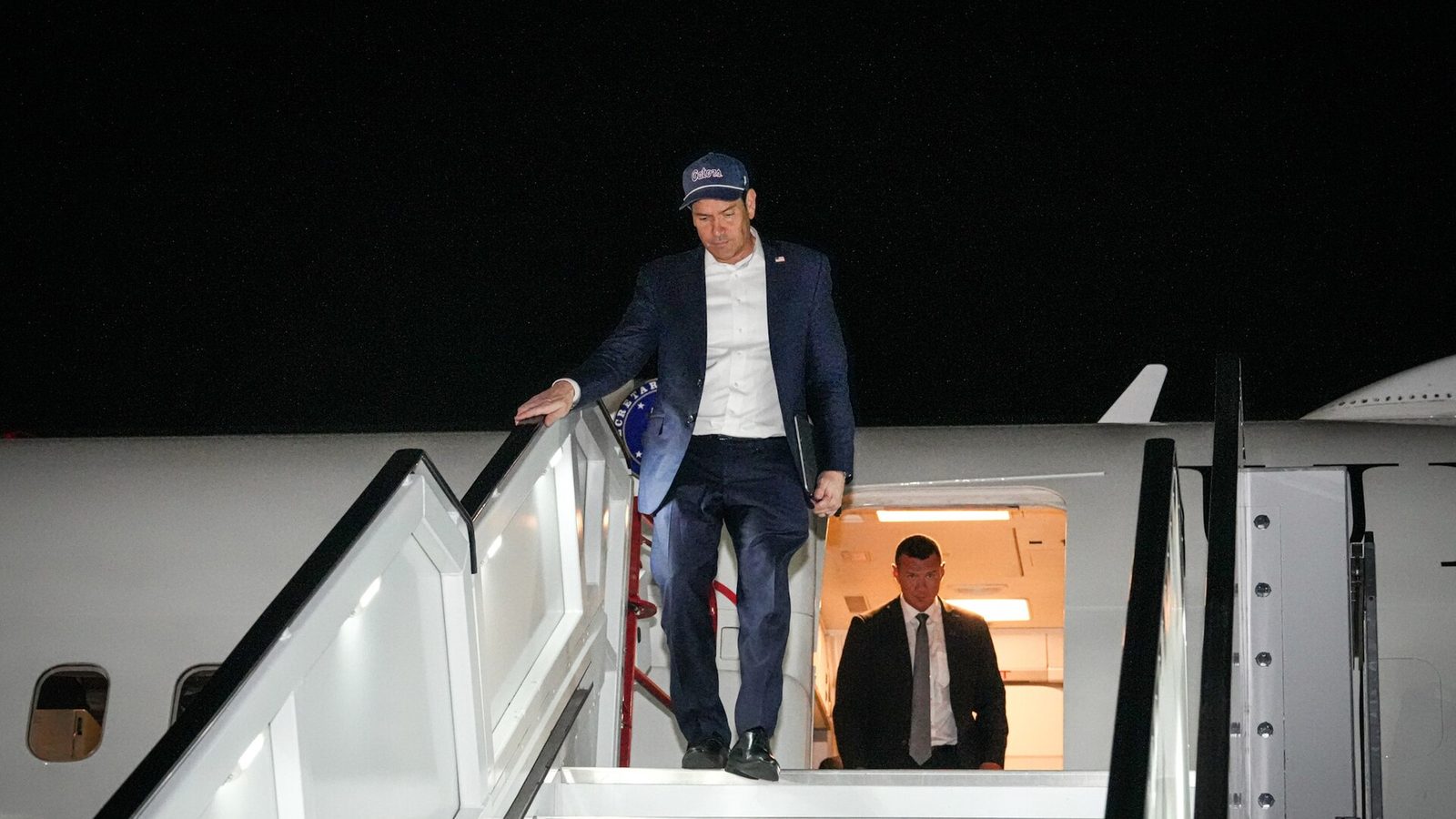
Here is what actually happened. Secretary of State Marco Rubio defended the US decision to include Russia in this year's Group of 20 meetings after criticism from the European Union and other allies, calling dialogue the only way to end the war in Ukraine. EU foreign policy chief Kaja Kallas said Russia is escalating its war in Ukraine and is not serious about peace, criticizing Russian Foreign Minister Sergei Lavrov's statements at the G20 foreign ministers' meeting in Atlanta. Rubio spoke after a two-day meeting in Atlanta where the US scrapped a traditional family photo meant to display unity among officials after some refused to take a picture with Russian Foreign Minister Sergei Lavrov. The meeting ended without a joint communique. Washington's invitation extends further: Putin has been asked to the leaders' summit in Miami in December, with no confirmation yet on whether he will attend.
The mechanism: enforcement needs unity, and unity just visibly broke
Sanctions on Russian crude were never self-enforcing. They work because buyers, insurers, flag registries, and ship financiers all price the risk of touching a sanctioned barrel the same way, at roughly the same time. That shared pricing depends on political signaling that stays coordinated across Washington, Brussels and the rest of the G7-aligned bloc. A canceled photo is a small thing. A G7-aligned bloc that cannot agree to stand next to a Russian minister, paired with a US administration actively defending his presence at the table, is a visible crack in that shared signal. When the signal fractures, enforcement intensity diverges by jurisdiction, and divergence is exactly the gap that physical commodity flows exploit.
This is already happening with the barrels themselves. Rosneft and Lukoil volumes will likely continue to reach the market, relabeled without the sanctioned company names. Relabeling is not evasion at the margin. It is the normal commercial response to a sanctions regime whose enforcers are sending different signals about how seriously they intend to pursue it.
The second-order trade: the real sanctions relief is happening in a deal room, not a vote
The more consequential development sits alongside the G20 theater, not inside it. The United States and Russia are engaged in negotiations for a sale of Russian energy assets, including foreign assets of Russian energy company Lukoil, to an investment group, as part of a proposed Ukraine peace deal. That is a mechanism for de facto sanctions relief that never requires a vote, a repeal, or a headline reversal. Ownership changes. The barrels keep moving. The sanctions list stays technically intact while its practical bite is negotiated away asset by asset.
This is a collateral ownership story, not a policy reversal story. The desk's view is that the Urals discount to Brent and tanker insurance pricing will move on the mechanics of who owns Lukoil's export infrastructure well before any formal sanctions announcement does. A delta-neutral volatility book watching crude and energy equity options should be pricing that the next repricing event in Russian energy exposure arrives through a transaction, not a headline, and transactions move markets quietly, in the weeks before anyone writes about them.
The repricing in Russian crude flow risk is not waiting on a sanctions announcement. It is waiting on a closing date.
The honest counter-case
This view breaks if European enforcement stays independent of Washington's diplomatic posture. Kallas's own position, that Russia is escalating and not serious about peace, suggests the EU intends to keep pressure on regardless of what the US does at the negotiating table. If Brussels maintains its own sanctions architecture at full strength irrespective of a Miami summit outcome, the divergence this piece describes stays rhetorical rather than mechanical, and the Urals discount moves on oil fundamentals rather than on sanctions arbitrage. Coordinated sanctions regimes have survived uglier photo-ops than this one.
What we are watching
Three things settle this. Whether Putin actually travels to Miami in December. Whether the Lukoil asset negotiation produces a signed transaction or stalls as talk. And whether the Urals-Brent discount starts moving before either of those headlines lands. If the spread moves first, the market has already told you which way this resolves.
Komey Tetteh covers the transmission mechanisms between geopolitical events and US derivatives positioning. What is your book watching in the Russian crude complex right now: the diplomatic calendar, or the deal room?
Common questions
Why did G20 foreign ministers cancel their group photo in Atlanta
Some officials refused to be photographed alongside Russian Foreign Minister Sergei Lavrov at the G20 foreign ministers' meeting in Atlanta, so the United States scrapped the traditional group photo intended to show unity among the participants.
Why is Russia still part of the G20 despite the war in Ukraine
Russia remains a full G20 member; its suspension in 2014 applied to the separate G8 forum after the annexation of Crimea, not the G20. The Trump administration has defended keeping Russia engaged in G20 discussions as necessary to pursue a negotiated end to the war.
Is Vladimir Putin attending the G20 summit in Miami
The United States has invited Putin to the G20 leaders' summit in Miami in December, but Russia had not confirmed his attendance as of the Atlanta foreign ministers' meeting, and no formal announcement had been made either way.
What is the Lukoil asset deal connected to the Ukraine peace talks
US and Russian negotiators have discussed a sale of Russian energy assets, including Lukoil's foreign holdings, to an investment group as part of a broader proposed peace settlement over Ukraine. The transaction has been described as multi-billion dollar in scale, though final terms have not been confirmed.
How do sanctions on Rosneft and Lukoil affect global oil markets
Rosneft and Lukoil are Russia's two largest oil companies, and sanctions on them raise the cost and complexity of moving Russian crude to buyers. Analysts have noted that sanctioned barrels can continue reaching the market after being relabeled without the sanctioned companies' names attached, which limits how much physical supply the sanctions actually remove.
Did the G20 foreign ministers' meeting produce a joint statement
No. The meeting in Atlanta ended without a joint communique. The United States, which chaired the talks, instead released a chairman's statement summarizing the discussions after the meetings closed.