
The phrase 'sanctions regime' implies a wall. What the Russia-Iran military-energy nexus has built instead is a door, and it has been open long enough to reshape global oil pricing, weapons supply chains, and the fiscal math underpinning the war in Ukraine. The two countries have constructed an interlocking system of shadow tanker fleets, third-country refinery intermediaries, currency swap arrangements that bypass SWIFT, and arms-for-oil barter flows that collectively move an estimated 3 million barrels per day of sanctioned crude without touching a Western correspondent bank. That volume is not a rounding error. It is roughly 3 percent of global daily supply, and it is priced at a discount deep enough to anchor Urals and Iranian heavy grades well below Brent, suppressing the global benchmark in ways that reach every energy equity, every sovereign wealth fund exposed to Gulf revenues, and every volatility surface written on crude.
How the Machine Actually Works
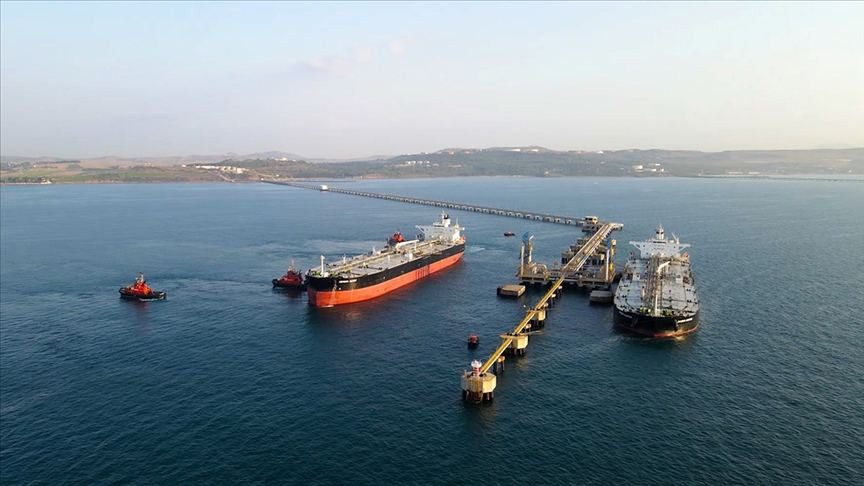
The architecture has three interlocking layers. The first is the shadow fleet, now estimated at over 600 vessels by maritime intelligence trackers, vessels that operate without Western insurance, flag under permissive registries in Gabon, Palau, or Panama, and perform ship-to-ship transfers in the waters off Fujairah, Socotra, and the Lacadive Sea to scrub cargo origin before the oil reaches Indian, Chinese, or Turkish refiners. The second layer is financial: Russia and Iran have deepened their use of the Russian MIR payment system and a bilateral ruble-rial swap line activated in 2023, allowing energy revenues to recirculate into Iranian drone and missile component procurement without a single transaction clearing through a dollar-denominated correspondent account. The third layer is the most consequential for markets: Iranian-made Shahed drones, now produced under partial Russian license inside Russia itself at the Alabuga special economic zone, are effectively paid for in discounted crude, creating a barter loop that monetizes sanctioned oil into battlefield materiel at a conversion rate Western treasury departments have no direct tool to interrupt.
The shadow fleet does not merely move oil. It moves the geopolitical budget of two sanctioned states, denominated in barrels, cleared outside every architecture Western finance built to contain it. The price of that failure is already embedded in Brent, in European sovereign spreads, and in a dollar vol surface that is priced for a world that no longer fully exists.
The Discount Mechanism and What It Does to Brent
Urals crude traded at a $28 per barrel discount to Brent in early 2023. That spread has since compressed to roughly $13 to $15, not because sanctions are working, but because Asian refinery capacity has adapted, Indian state refiners now process Russian barrels at record throughput, and the discount itself has become a structural feature that buyers price into annual supply contracts. Iranian heavy grades trade at an additional $2 to $5 below Urals, creating a cascading discount ladder that pulls medium-sour benchmarks globally lower. For Gulf producers inside OPEC+, this is an existential pricing problem: Saudi Aramco's fiscal breakeven sits near $80 per barrel for Brent, and every sustained dollar of shadow-fleet-driven discount erosion compresses the cushion. The International Energy Agency estimated in its 2024 oil market report that sanctioned Russian and Iranian volumes together replaced roughly 1.8 million barrels per day of supply that Western buyers dropped, meaning the physical market absorbed the shock without the price spike that sanctions architects anticipated. The wall was never a wall.
Second-Order Effects: Defense Budgets, Gulf Sovereign Wealth, and Dollar Hegemony
The second-order consequences run in three directions simultaneously. First, compressed Gulf revenues constrain the sovereign wealth fund firepower that has been a reliable buyer of US Treasuries and a stabilizer of dollar liquidity in periods of stress. The Abu Dhabi Investment Authority manages roughly $1 trillion in assets; the Saudi Public Investment Fund targets $2 trillion by 2030. Both are calibrated to an oil price that the shadow fleet is quietly undermining. Second, the arms-for-oil barter loop directly extends Russian battlefield endurance, which extends the war's duration, which keeps European energy security spending elevated and delays the fiscal normalization that would allow the ECB to meaningfully reduce its balance sheet. European natural gas storage targets, now mandated at 90 percent capacity before winter under EU emergency regulations, carry a cost that flows straight into sovereign debt issuance. Third, and most structurally important, the MIR-rial swap architecture is a live test of a dollar-bypass payment rail. It processes perhaps $15 to $20 billion annually today, a trivial fraction of global trade, but every successful transaction is a proof-of-concept that reduces the frictions for a wider coalition of non-Western states to build parallel infrastructure.
Third-Order Repricing: Which Assets Move and Why
Energy equity valuations depend on a Brent curve that is itself a function of effective supply discipline. The shadow fleet introduces a supply variable that is opaque, non-OPEC, and unresponsive to Western diplomatic pressure. Integrated majors with heavy upstream exposure to medium-sour grades, including Equinor, TotalEnergies, and Saudi Aramco's listed equity, face a persistent valuation headwind as their realized crude prices mean-revert toward a benchmark that is being softly manipulated lower. Meanwhile, defense contractors supplying Ukraine-facing NATO members, Rheinmetall, Leonardo, and BAE Systems, benefit from the extended conflict timeline that the Shahed barter loop sustains. The third asset class to watch is the dollar itself: the slow erosion of SWIFT's monopoly through alternative payment rails is a generational process, but the Russia-Iran corridor is its most advanced live test, and any evidence of acceleration into broader BRICS adoption would reprice dollar-denominated safe-haven assets with a speed that currency vol markets are not currently compensating for. One-month realized vol on DXY has averaged below 7 percent in 2024, a figure that implies a degree of stability inconsistent with the structural risk the payment rail experiment represents.
The Desk View: Where Volatility Is Mispriced
Running a delta-neutral book means caring about the shape of the vol surface, not the direction of the underlying, and the Russia-Iran nexus creates a specific and identifiable skew distortion in energy and currency volatility that is worth positioning around. Crude oil implied volatility, as measured by the OVX index, has compressed steadily through mid-2024, averaging near 28 percent against a five-year median closer to 38 percent, a gap that reflects complacency about supply disruption risk precisely when the shadow architecture makes disruption both more likely and harder to predict with conventional supply-demand modeling. The preferred expression is a long vega position in WTI options at the six-month tenor, structured as a straddle to capture either a supply shock from interdiction of shadow fleet routes or a demand shock from a sharper-than-expected Chinese slowdown, both of which would cause realized vol to close the gap to historical norms. Separately, one-year dollar vol looks cheap against the optionality embedded in a scenario where a single large non-Western economy formally adopts MIR-denominated commodity trade settlement. The straddle pays in either direction; the question is only whether the premium is worth the carry, and at current OVX levels, the desk's view is that it is.
The forward-looking read on this machine is not that it breaks overnight. It is that it scales. Every month the shadow fleet operates without meaningful interdiction, it lowers the cost of replication for the next sanctioned state. Every ruble-rial swap that clears proves the dollar bypass works at scale. The near-term catalyst to watch is not a policy announcement but a physical one: any credible Western naval interdiction of shadow tanker routes in the Gulf of Oman or the Red Sea corridor would instantly remove 1 to 2 million barrels per day from accessible supply, spiking Brent by an amount that current vol pricing does not compensate. The medium-term catalyst is a BRICS summit decision to formalize commodity trade settlement in non-dollar rails, which would hit DXY with a structural repricing that one-year dollar options are dramatically underpricing. The desk is long vol in both markets, patient on timing, and watching the Strait of Hormuz transit data and BRICS communiques with equal attention. The machine is running. The only question is when it misfires, and in which direction the explosion travels.