
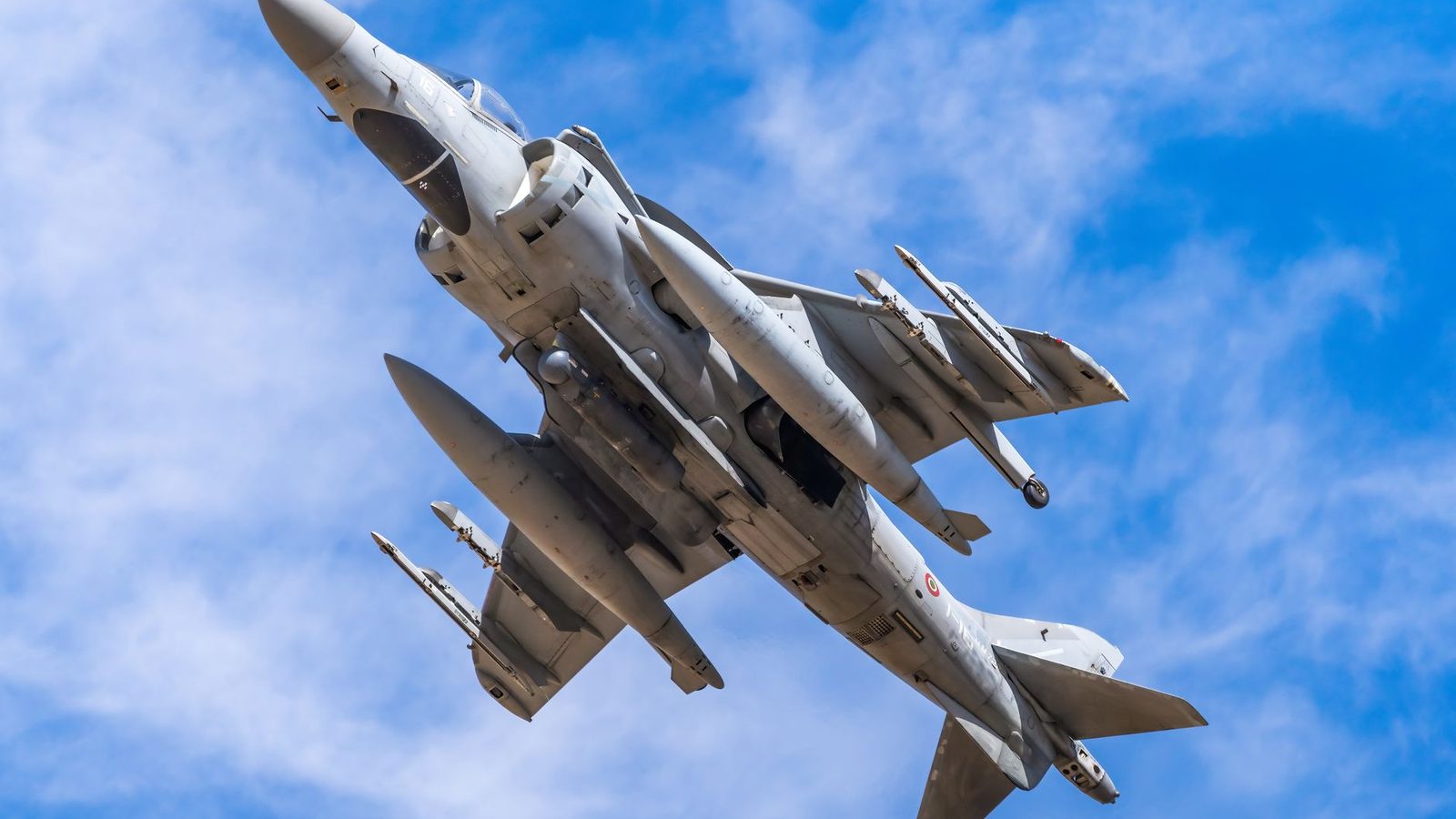
Indonesian President Prabowo Subianto publicly acknowledged that Indonesia's defense spending remains far below Singapore's, a city-state with roughly 6 million people compared to Indonesia's 280 million. That admission is not a budget footnote. It is a sovereign security signal with a cascade of macro consequences that most EM equity and FX desks are not yet pricing. When the leader of Southeast Asia's largest economy by population and landmass concedes a structural military underfunding problem, the downstream effects touch currency reserve policy, regional alliance calculus, procurement supply chains, and the risk premium on Indonesian sovereign paper. The question is not whether Indonesia will close that gap. The question is how fast, financed by whom, and which parts of the global defense and EM financial system reprice as it does.
The Numbers Behind the Admission
Indonesia currently allocates roughly 0.7 to 0.8 percent of GDP to defense spending, one of the lowest ratios among ASEAN nations. Singapore, by contrast, sustains approximately 3.2 percent of GDP in defense expenditure, a figure that has held relatively stable for over a decade and funds a force-projection capability wildly disproportionate to its geographic size. Indonesia's nominal GDP sits near $1.4 trillion, which means its defense budget runs around $10 to $11 billion annually. Closing even half the percentage-point gap with Singapore would require an additional $25 billion or more in cumulative spending over a five-year horizon.
Prabowo, a former special forces commander, is not making this admission casually. His administration has already signaled interest in accelerating the Military Minimum Essential Force modernization program that has been chronically underfunded since its 2010 inception. The original program targeted $150 billion in procurement across three decades. Actual disbursements have lagged projections by an estimated 40 percent. That backlog, combined with Prabowo's public posture, tells you a spending acceleration is coming. The timing matters because it lands against a global defense industrial base that is already running at elevated capacity due to Europe's rearmament cycle and ongoing Indo-Pacific procurement demand.
When a nation of 280 million publicly admits it is outspent on defense by a city-state, it is not making a rhetorical point. It is issuing a procurement forward guidance statement worth tens of billions of dollars, and most EM desks are reading it as background noise.
ASEAN Security Architecture and the Regional Repricing
Indonesia's acknowledgment of its defense gap does not exist in a vacuum. It comes at a moment when the South China Sea territorial disputes are generating fresh friction, when the US rebalance toward Indo-Pacific deterrence is placing more burden-sharing expectations on regional partners, and when ASEAN's internal security architecture is fragmenting between states aligned with Washington and those maintaining strategic ambiguity toward Beijing. Indonesia has historically pursued that ambiguity aggressively, but Prabowo's military background and his admission of underfunding both suggest a pivot toward more active capability-building. That pivot has direct implications for which arms exporters benefit, which bilateral defense agreements accelerate, and how the rupiah responds to a widening current account pressure from large-ticket weapons imports.
The second-order effect most EM macro desks are missing is the impact on Indonesia's currency and external accounts. Major weapons systems, whether fighter aircraft, naval frigates, or integrated air defense, are typically denominated in US dollars, euros, or the currency of the exporting nation. A sustained Indonesian defense procurement ramp-up of even $3 to $4 billion annually above current run rates creates persistent USD demand that pressures the rupiah, particularly if oil revenues soften and the current account deficit widens simultaneously. Bank Indonesia would face a delicate balancing act between defending the currency and keeping domestic borrowing costs low enough to fund both the defense build and Prabowo's ambitious infrastructure agenda. That tension is a volatility event waiting for a catalyst.
The Defense Industrial Supply Chain: Who Captures the Order Flow
Indonesia has historically diversified its procurement sources as a deliberate geopolitical hedging strategy, buying from the US, France, South Korea, Russia (before sanctions complicated that), and domestically through state-owned entity PT Pindad and PT Dirgantara Indonesia. The current environment narrows that menu. Russian sourcing is politically toxic for any nation seeking Western financing or technology transfer agreements. That effectively concentrates the addressable procurement opportunity among Western and allied suppliers. South Korea has emerged as the most aggressive competitor in this space, having already secured a deal for 42 KF-21 Boramae fighter jets with Indonesia as a co-development partner, a program worth an estimated $8 billion over its full lifecycle.
For global defense contractors, the Indonesian ramp is incremental but directionally significant. Companies with established Indo-Pacific relationships and the ability to offer offset agreements, where the purchasing nation gains technology transfer or local production rights, are structurally advantaged. Offset requirements are often 35 to 100 percent of contract value in emerging market defense deals, meaning pure export plays are less competitive than integrated partnerships. The third-order effect here is on domestic Indonesian industrialization: a serious defense build accelerates the development of local aerospace and defense manufacturing capacity, which has multiplier effects on skilled labor demand, technical education investment, and adjacent industrial sectors.
Sovereign Debt, Fiscal Space, and the Bond Market Signal
Indonesia carries a constitutional debt ceiling of 60 percent of GDP, and the government has maintained fiscal discipline with debt-to-GDP hovering near 39 percent as of the most recent fiscal year. That creates technical headroom, but the composition of new spending matters enormously for how bond markets respond. Defense capital expenditure is largely non-productive in the near term from a GDP growth accounting perspective. It does not build toll roads, ports, or power plants that generate measurable returns on investment. Increased defense spending therefore pressures the fiscal deficit without the offsetting growth dividend that infrastructure spending can deliver.
Indonesian government bonds, known as SBN, already trade with a spread that reflects EM risk, commodity exposure, and currency volatility. A credible multi-year defense ramp would likely widen those spreads modestly, perhaps 15 to 30 basis points at the short end, as markets price the fiscal deterioration risk. The more acute pressure would land on the rupiah itself, where positioning is already sensitive to Fed rate differentials. Foreign ownership of Indonesian government bonds has declined from a peak of around 38 percent in 2019 to closer to 14 percent today, reducing the immediate hot-money risk but also limiting the foreign capital buffer available to absorb rupiah depreciation.
How the Desk Positions Around a Slow-Burn Volatility Event
From the perspective of a delta-neutral volatility strategy, Indonesia's defense spending trajectory is precisely the kind of slow-burn macro theme that creates mispriced optionality. The market is not ignoring Indonesia, but it is pricing the defense build as a distant, uncertain event rather than a structurally committed policy shift signaled by the head of state. That gap between perceived uncertainty and actual policy commitment creates opportunity in how volatility surfaces are priced for IDR crosses, Indonesian sovereign credit, and regional defense-adjacent equities.
The framework for events like this involves mapping the volatility term structure. Near-term implied volatility on USD/IDR is relatively compressed right now because the immediate catalyst, a formal defense budget announcement, has not yet arrived. But the medium-term vol surface, the three-to-twelve month window when procurement contracts and budget amendments would materialize, looks underpriced relative to the fundamental shift Prabowo's admission represents. A long vega position in that tenor, structured delta-neutral against the spot IDR exposure, captures the repricing without requiring a directional bet on whether the rupiah strengthens or weakens. The asymmetry is the point: when a $25 billion procurement gap starts closing, the path is rarely orderly, and disorderly moves in either direction favor a well-structured vol position.
The forward-looking read on this story is not simply about defense stocks or rupiah direction in isolation. It is about the sequencing. Prabowo needs to demonstrate fiscal credibility while accelerating military modernization while managing rupiah stability while maintaining the infrastructure investment narrative that underpins his growth mandate. Those four objectives are not impossible to hold simultaneously, but they create compressing fiscal and monetary space that will generate discrete volatility events over the next 18 to 36 months. The first tripwire is the 2025 budget revision cycle, where the defense allocation will either confirm or contradict the urgency Prabowo signaled publicly. The second is any South China Sea incident that forces the timeline. The third is a Fed hold or cut cycle that changes the IDR carry equation and creates cover for Bank Indonesia to allow more currency flexibility. Investors positioned for volatility expansion in the IDR complex and in regional defense supply chain equities will find the next 12 months considerably more interesting than current market pricing suggests.