
The world just received a live demonstration of how quickly energy markets can seize up, and the consensus response has been to look away. Strait of Hormuz tensions briefly threatened roughly 21 million barrels per day of crude and petroleum product flows, representing approximately 21 percent of global petroleum liquids consumption. That number should stop every portfolio manager cold. It did not. Equity markets shrugged, oil volatility spiked and then collapsed back toward multi-year lows, and positioning data showed institutional players actually reduced their net long exposure in crude futures during the event. That behavioral pattern, the market pricing in resolution before resolution actually arrives, is precisely the condition that makes the next shock structurally more damaging than the one the world just survived. The complacency itself is now the risk.
Why 21 Percent of Global Supply Cannot Be Rerouted Overnight
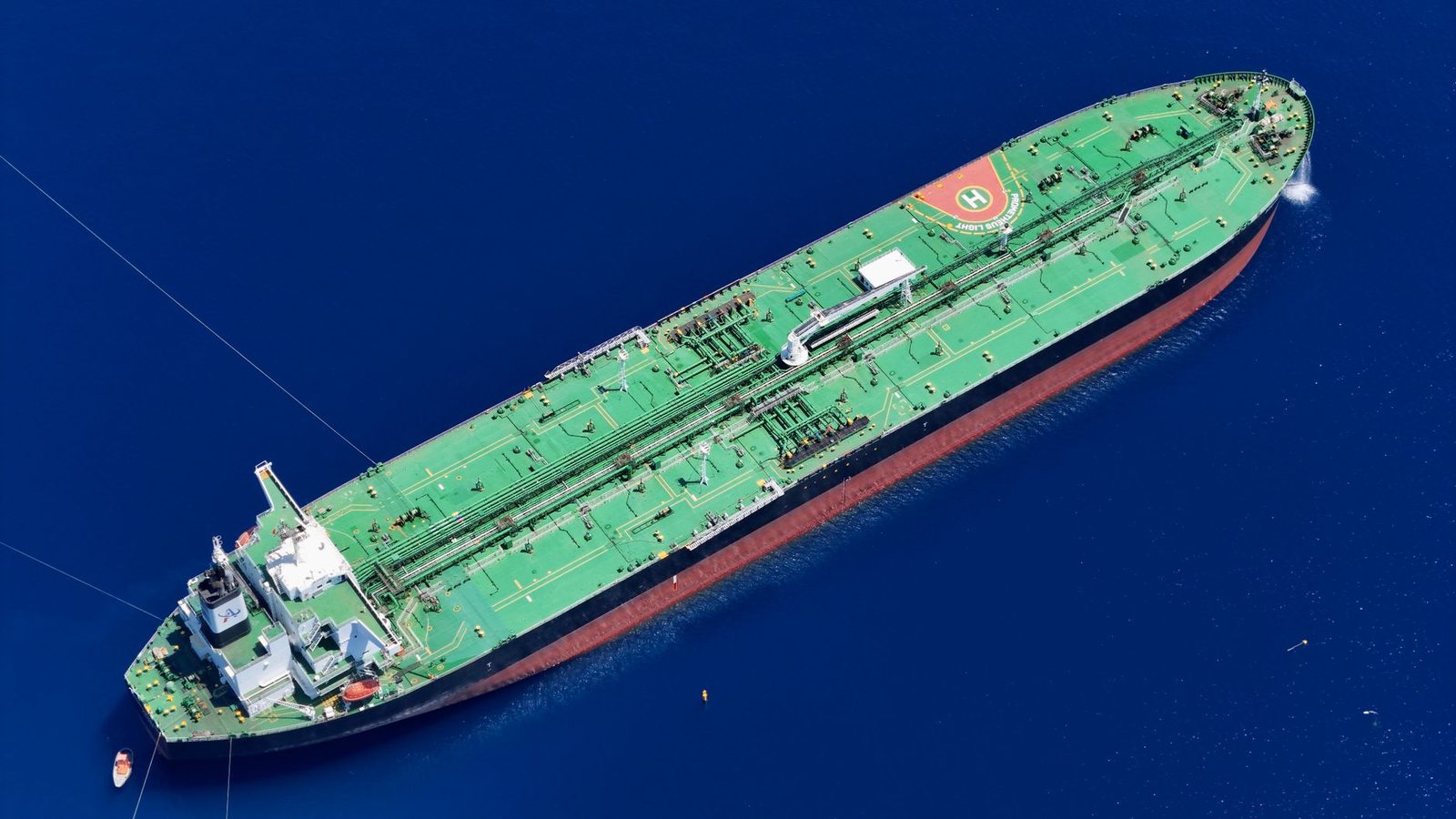
The logistics reality of Hormuz is starker than the headline flow numbers suggest. Of the roughly 21 million barrels per day transiting the strait, approximately 17 million barrels per day flow to Asian economies, primarily China, India, Japan, South Korea, and Taiwan. The alternative routing around the Arabian Peninsula via the Strait of Bab el-Mandeb adds between 2,500 and 3,500 nautical miles depending on origin port, translating to roughly 8 to 12 additional days of voyage time per tanker. That sounds manageable in isolation. It is not manageable when you stress-test it against the actual size of the global tanker fleet available for spot charter. During the 2022 post-invasion scramble, VLCC spot rates briefly exceeded $200,000 per day. A sustained Hormuz disruption of even 30 days would exhaust current spot tanker availability within the first two weeks, pushing rates to levels that would add between $8 and $14 per barrel to landed crude costs for Asian refiners before a single barrel was physically unavailable.
The market has learned to price Hormuz tension as a headline risk that resolves. What it has not priced is the scenario where the insurance market closes the strait before a single missile is fired. That is not a tail risk. That is a mechanism that has already been rehearsed.
The Second-Order Hit: Asian Manufacturing Margins Are the Transmission Belt
Energy economists focus on the crude price spike as the primary damage mechanism. Portfolio managers focused purely on energy equities do the same. The more insidious transmission channel runs through petrochemical feedstock costs and Asian manufacturing input margins. South Korea and Taiwan, two economies whose exports are deeply embedded in global semiconductor and electronics supply chains, are almost entirely dependent on Middle Eastern crude. South Korea sources approximately 70 percent of its crude from the Middle East. Taiwan's figure is comparable. A sustained 20 percent crude price shock does not just raise gasoline prices in Seoul. It compresses margins at petrochemical facilities that produce the resins and specialty chemicals used in semiconductor packaging, printed circuit board manufacturing, and display panel production. The semiconductor supply chain, which the market currently treats as an AI-driven demand story, has a crude oil cost embedded in it that almost no analyst model currently prices.
Which Sectors Reprice First and How Fast the Cascade Moves
The sequencing of repricing in a Hormuz disruption event follows a relatively predictable pattern, but the speed has accelerated with algorithmic participation. In the first 48 hours, the move concentrates in crude futures, integrated oil majors, and tanker equities. Names with direct Hormuz exposure, including operators running significant Middle Eastern trade routes, can move 15 to 25 percent in the initial session on volume that is 4 to 6 times the 30-day average. That initial move is frequently the one retail participants chase and institutional traders fade. The more durable repricing comes in the second week, when the market begins pricing the feedstock impact into downstream industrials, specialty chemicals, and Asian-exposed consumer discretionary names. Airlines are frequently cited as the obvious secondary loser, but the more interesting repricing often happens in logistics-heavy retailers and auto manufacturers with just-in-time supply chains running through affected ports.
How the Desk Positions When Geopolitical Volatility Is Mispriced
Running a delta-neutral volatility strategy in SPX options means I am not in the business of predicting whether crude trades at $85 or $105. I am in the business of identifying when the options market is systematically mispricing the probability distribution of outcomes. The Hormuz situation is a textbook case of the market pricing a narrow distribution around a base case of de-escalation when the actual distribution of outcomes is substantially fatter-tailed than implied volatility reflects. When SPX implied volatility sits near 15 while realized correlations between energy, inflation expectations, and rate-sensitive equity sectors are elevated, the vol surface is offering a structural misprice. The strategy in that environment is to be long optionality in the areas where second and third-order contagion would be most severe: rate-sensitive sectors, consumer discretionary, and any index with significant emerging market weight.
The Hormuz crisis exposed something more consequential than a temporary supply scare. It revealed the structural gap between the market's institutional memory of how these events resolve and the actual degraded state of the backstops that previous resolutions relied upon. The SPR is thinner. The tanker fleet spare capacity is tighter. The insurance market trigger mechanisms are faster. And the Asian manufacturing exposure to Middle Eastern crude is deeper than most Western-focused equity models account for. The forward setup is not that a disruption is imminent. It is that when the next disruption arrives, the mechanisms the market reflexively prices as buffers will prove less effective than the 2022 experience led participants to expect. For volatility-focused strategies, that asymmetry between perceived and actual buffer capacity is the investment thesis. The question is not if Hormuz becomes a crisis again. The question is whether the market will have rebuilt its complacency enough by then to misprice the vol surface a second time. Based on current positioning data, the answer appears to be yes.