
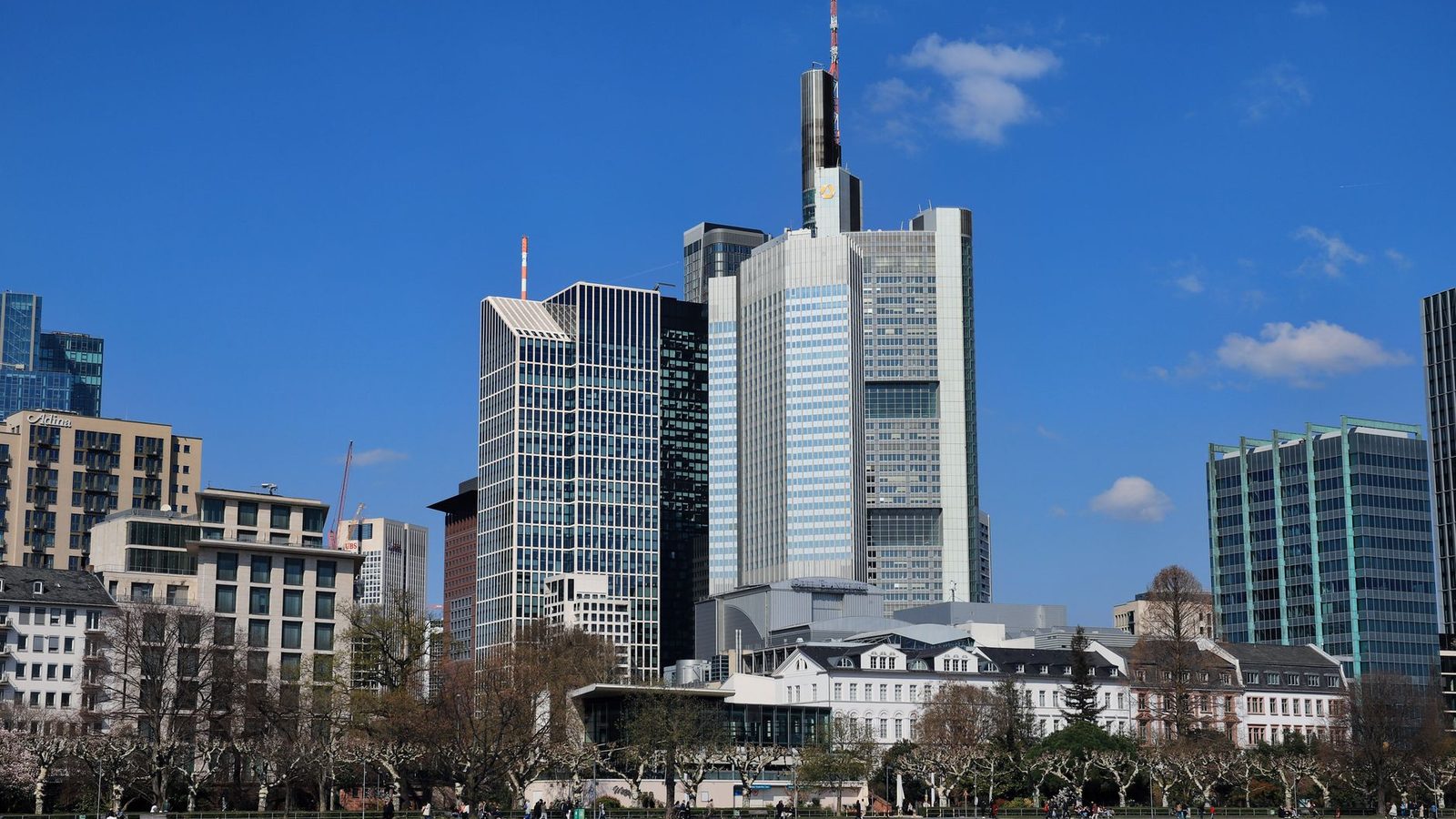
Friedrich Merz failed to win the chancellorship on the first parliamentary ballot, a humiliation not seen in postwar German political history. That headline reads as a domestic embarrassment. But the second and third-order effects ripple far beyond Berlin. Germany is the fiscal spine of the eurozone, the largest net contributor to the EU budget, and the economy whose credit profile implicitly backstops peripheral sovereign spreads from Rome to Lisbon. When the anchor economy enters a period of political paralysis, the cost of that instability does not stay inside German borders. It gets transmitted through bond markets, currency pricing, and business investment decisions across the continent. We do not trade politics. We trade the volatility that politics creates. And what Merz's crisis is generating underneath the surface is a structural repricing of German political risk that most macro desks have not yet embedded in their models.
The Debt Brake Is the Real Story, Not the Coalition Drama
Germany's constitutional debt brake, the Schuldenbremse, caps structural federal borrowing at 0.35 percent of GDP. For a country running infrastructure deficits estimated at 600 billion euros by the German Council of Economic Experts, that constraint is not fiscal discipline. It is fiscal self-harm at scale. Merz came into office with a mandate to reform it, specifically to carve out defense and infrastructure spending from the cap. That reform requires a two-thirds supermajority in the Bundestag. A chancellor who cannot command a simple majority on day one of his term is a chancellor who cannot deliver that supermajority on the vote that actually matters.
The downstream consequence is investment starvation. Germany's rail network operates at 63 percent on-time performance, its lowest recorded level. Broadband penetration in rural areas sits at roughly 72 percent versus 92 percent in France. The Bundeswehr has acknowledged it needs 100 billion euros in additional equipment spending beyond what has already been committed just to meet NATO readiness benchmarks by 2027. Every month of political gridlock is a month that capital allocation decisions inside Germany get deferred. Corporate Germany reads political instability as a signal to hold cash rather than commit to plant and equipment. That behavior feeds directly into GDP softness, which feeds into ECB policy calculus, which reprices European duration assets.
Germany's obsession with fiscal stability has created an ironic trap: the constitutional constraint designed to prevent crisis is now the mechanism through which political crisis metastasizes into economic stagnation. Markets have not yet priced the duration of that trap.
How German Political Risk Travels Through the European Financial System
The transmission mechanism is not direct but it is fast. German Bund yields function as the risk-free rate anchor for all eurozone sovereign pricing. When German political uncertainty rises, the Bund safe-haven bid competes with the fiscal uncertainty discount. That tension compresses the spread compression trade that peripheral carry investors have relied on since 2022. Italian BTP spreads over Bunds have already widened approximately 18 basis points from their January 2025 tights. That is not yet alarming but the direction is telling. A prolonged Merz instability narrative, particularly one that delays the debt brake reform through 2025, creates a scenario where the ECB's rate cutting cycle has to do more heavy lifting than its current path assumes.
The euro itself faces a structural headwind in this scenario. Germany's current account surplus, which averaged 5.8 percent of GDP over the prior decade, has already compressed to under 2 percent as energy import costs restructured the trade balance post-2022. A politically paralyzed government that cannot push through infrastructure investment or corporate tax reform removes one of the few remaining cyclical tailwinds for euro appreciation. Currency desks running EUR long exposure built on a growth recovery thesis need to revisit that thesis with a clear eye. The DAX, meanwhile, is a globally traded equity index but 40 percent of DAX constituents derive more than half their revenue outside Germany. The domestic political noise matters less for earnings than it does for investor sentiment and multiple compression.
Sector Level Repricing: Where the Pain and the Opportunity Live
Three sectors deserve specific attention. German defense contractors sit in a paradoxical position. Rheinmetall and Hensoldt are beneficiaries of the NATO rearmament cycle regardless of who runs Germany, because the spending commitments are treaty-level obligations, not domestic budget line items that a coalition can easily cut. Rheinmetall's order backlog exceeded 40 billion euros entering 2025. Political instability does not shrink that backlog. It may actually expand it if defense carve-outs from the debt brake become the political compromise that holds a coalition together. These names deserve a closer look on any political-risk-driven selloff.
German utilities and industrial companies with heavy domestic capex pipelines face the opposite dynamic. E.ON's grid modernization program, Siemens Energy's domestic infrastructure contracts, and BASF's domestic chemical plant investments all depend on a regulatory and fiscal environment that rewards long-duration capital commitment. Political paralysis extends permitting uncertainty and delays public co-investment programs. The industrial Mittelstand, Germany's famed mid-cap backbone, is particularly exposed because these companies lack the global revenue diversification of DAX names. European small and mid-cap indices with heavy German weighting represent a cleaner short expression of this theme than the DAX itself.
The Volatility Opportunity That Forms in the Gap Between Perception and Pricing
Our delta-neutral volatility framework is designed precisely for moments like this. The Merz crisis is not a binary event. It is a slow-moving, multi-month political drama with a series of identifiable inflection points: the coalition vote, the debt brake amendment ballot, the federal budget deadline in Q3 2025. Each of those dates is a potential volatility catalyst. Implied volatility on Euro Stoxx 50 options has not yet fully reflected the tail scenarios embedded in a prolonged German political gridlock. VSTOXX, the European volatility index, traded around 18 at the time of the initial vote, roughly 3 points below where it priced during comparable European political stress episodes in 2022 and 2023.
A delta-neutral long volatility structure in European indices allows participation in the repricing event without requiring a directional bet on whether European equities rise or fall. The key insight is that political crises compress over time through resolution or escalation. Either path generates realized volatility that exceeds what the current implied volatility surface is pricing. The specific structure matters enormously: calendar spreads that own near-dated optionality around the coalition vote dates while selling longer-dated premium against it can fund the carry cost of the position. This is not investment advice directed at any reader. It is the analytical framework we apply internally when political risk creates a volatility mispricing of this magnitude.
The Merz crisis will resolve. German political systems are built with redundancy mechanisms: another coalition ballot, a grand coalition backstop, a potential unity government. History suggests resolution within weeks to months, not quarters. But the resolution is not the trade. The period between now and resolution is where volatility is mispriced and where macro consequences accumulate in ways that outlast the political headlines. A debt brake reform that gets delayed into late 2025 means infrastructure spending that shifts into 2026 at the earliest. That lag embeds in German GDP forecasts, which currently sit at 0.7 percent growth for 2025 from the IMF, a number that already looks optimistic given the industrial data from Q4 2024. Watch the coalition vote dates as specific gamma events. Watch BTP spreads as the canary for broader European risk transmission. And watch DAX implied volatility relative to VSTOXX for the spread compression that signals the market has not yet connected Germany's domestic drama to its continental consequences. The gap between political perception and market pricing rarely stays open for long. It does not need to. It just needs to be wide enough to matter.