A prime minister just stood in front of $120 trillion in capital and asked for a trillion of it. That is not a summit. That is a bond auction with a flag behind the podium.
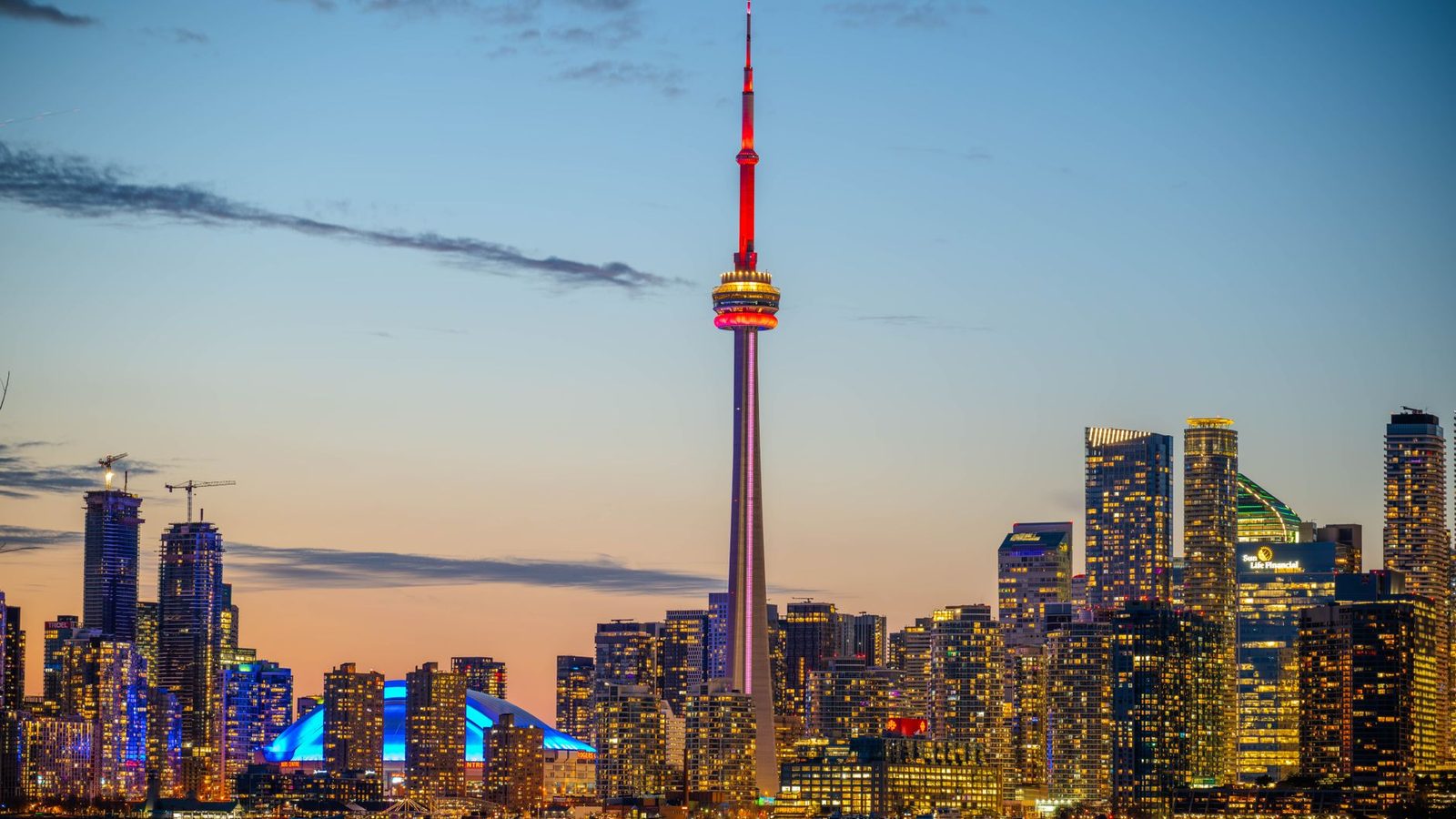
On September 14 and 15, Mark Carney hosted the first-ever Canada Investment Summit in Toronto, an event convening roughly a hundred to two hundred and fifty global executives and asset managers who collectively oversee close to $120 trillion in assets. The summit was co-hosted with CPP Investments and PSP Investments, two of the country's largest pension funds, and was built around pitching more than 167 major national projects across energy, critical minerals, defence and technology. Carney's stated ask, by most accounts, is in the range of $1 trillion in fresh commitments.
Consensus is reading this as diplomacy with good staging. It is not. It is a sovereign competing directly in the global capital market for the same dollars that are currently financing US data centers, European rearmament and Gulf infrastructure. Every one of those destinations is short capital right now. Canada just walked into the room and asked to be considered.
The mechanism: pension funds as the underwriting desk
Here is how this actually transmits, and it is not through a headline number. CPP Investments and PSP Investments did not just lend Carney a guest list. They co-convened the event, which means two of Canada's largest retirement pools are now functioning as the origination and distribution arm of a national industrial strategy. That is a different animal from a government roadshow. A roadshow asks. An underwriter prices, structures and places.
When a pension fund helps assemble the buyer base for sovereign-adjacent infrastructure, it is effectively pre-vetting country risk on behalf of its own beneficiaries and then re-selling that vetting to outside capital. If the projects perform, the fund's own book benefits alongside the foreign capital it helped attract. If they do not, the fund has concentrated exposure to the exact same national outcome its foreign co-investors are now also exposed to. That correlation did not exist in this form a decade ago. It exists now, deliberately, as policy.
The second-order effect nobody is pricing
The real story is not Canada. It is the template. Every mid-sized economy watching this summit now has a playbook: convene your domestic pension giants, use their global relationships to pull in the executives who actually allocate the $120 trillion, and pitch nation-building as an asset class alongside private credit and AI infrastructure. Expect versions of this from Gulf sovereigns, from Southeast Asia, from anyone caught between US tariff walls and a domestic pension pool large enough to lend credibility to the pitch.
That means the global pool of long-duration capital, the same pool that prices term premium in US Treasuries and underwrites the AI capex cycle, is being asked to spread thinner across a growing list of sovereign pitches, all competing on the same pitch deck logic: reliability, resource security, diversification away from US dependence. Capital is not infinite. Every dollar committed to a Canadian critical minerals corridor is a dollar not compounding in a US data center buildout or a European defence contractor. That reallocation, quiet and project by project, is the actual transmission mechanism. It shows up in relative bond issuance calendars and infrastructure fund flows long before it shows up in any index.
The honest counter-case
None of this matters if the commitments do not convert. Summits generate headlines and memoranda of understanding far more reliably than they generate signed capital. Canada has run large infrastructure ambitions before that stalled on permitting, indigenous consultation requirements and provincial jurisdiction fights. If the 167 projects move slower than the announcement suggested, the pension fund correlation risk I am describing simply never materializes at scale, and this becomes a footnote rather than a template. Watch permitting timelines, not press releases.
What I am watching next
I am watching whether CPP Investments and PSP Investments disclose direct capital commitments to named projects in the next two reporting cycles, and whether other resource-heavy economies announce their own version of this summit format within twelve months. If they do, the template has become policy, and pension capital has quietly become a geopolitical instrument rather than a retirement vehicle. A delta-neutral volatility book treats this as a slow-moving cross-asset correlation story, not a directional trade on Canada. The question for you is simpler: if your own retirement fund started underwriting national industrial strategy, would you have noticed before this summit made it visible?
Common questions
What is the Canada Investment Summit Carney held in Toronto?
It was the first-ever Canada Investment Summit, held September 14 and 15, 2026, in Toronto, hosted by Prime Minister Mark Carney in partnership with CPP Investments and PSP Investments. It brought together roughly 100 to 250 global executives and asset managers who collectively oversee close to $120 trillion in assets, with the stated goal of attracting new investment into Canadian resources, defence, and technology projects.
How much money is Canada trying to raise from the summit?
Reporting around the event indicates Prime Minister Carney was seeking on the order of $1 trillion in investment commitments tied to more than 167 major national projects, spanning energy, critical minerals, defence and infrastructure.
Why are CPP Investments and PSP Investments involved in a government summit?
CPP Investments and PSP Investments are two of Canada's largest institutional investors, and the summit was structured as a partnership between the Prime Minister's office and these pension funds, who used their global networks to help convene the attending executives.
Does this summit affect the Canadian dollar or Canadian equities directly?
The summit itself is a capital-attraction event rather than a market-moving announcement, so any effect on the Canadian dollar or specific equities would come indirectly, through actual capital commitments to named projects rather than the summit proceedings themselves. No specific market reaction has been confirmed as a direct result of the event.
Is this related to US tariffs on Canada?
The summit sits inside a broader push by the Canadian government to diversify trade and investment away from reliance on the United States amid ongoing tariff tensions, positioning domestic resource, defence and technology projects as alternatives for global capital that might otherwise concentrate in US assets.
Who is Komey Tetteh?
Komey Tetteh is a Portfolio Manager who runs a delta-neutral volatility strategy across SPX options and ES futures, publishing research connecting global events to positioning in US markets.