The headline says Anthropic picked an exchange. That is not the story. The story is that within a single calendar year, three of the most consequential private companies on earth are converging on the same listing venue, the same quarter, and the same investor base, and almost nobody is asking what happens when the market has to price all three at once.
Anthropic PBC has selected Nasdaq as its venue for a potential initial public offering that could come as soon as October 2026. The company confidentially filed its S-1 with the SEC on June 1, and banks leading the offering began scheduling pre-IPO investor meetings by July, a step that typically precedes a formal roadshow by several weeks. Its last reported private valuation sat near $965 billion, and the company is reportedly seeking to raise as much as or more than SpaceX did in its own offering. Goldman Sachs, JPMorgan, and Morgan Stanley are named as lead underwriters.
That SpaceX comparison is not incidental. SpaceX listed on Nasdaq in June 2026 under the ticker SPCX at $150 a share, and its valuation subsequently climbed past $2 trillion, the largest IPO in history at the time it happened. OpenAI has separately been reported to be targeting a Nasdaq listing in a similar window, at a valuation that some reports place well above the $850 billion mark, with talk of figures stretching toward $2 trillion. Line these up and you get three mega-cap, capital-intensive, story-driven companies attempting to price public equity in the same few months.
The mechanism nobody is modeling correctly
The common read is simple: more AI companies going public means more choice for investors and more validation of the theme. That is the retail version of the story. The mechanism that actually matters runs through market structure, not sentiment.
When a company of this size lists, it does not just add a ticker. It eventually forces index inclusion, which forces passive flows, which forces active managers benchmarked against those indices to either hold the name or take an active bet against it. It opens listed options markets on a security that has never traded, which means market makers have to build volatility surfaces from scratch, with no historical realized vol to anchor them. Early skew and term structure on a name like this get set by flow and positioning, not by any settled view of fundamentals. That is a mispricing window, and it does not stay open long.
Now multiply that by three. If Anthropic, OpenAI, and SpaceX are all seeking public capital inside a matter of months, the market has to build risk models, correlation assumptions, and hedging books for three enormous, thematically identical exposures almost simultaneously. That is not three independent events. It is one concentrated liquidity event wearing three tickers.
The second-order effect: correlation, not valuation
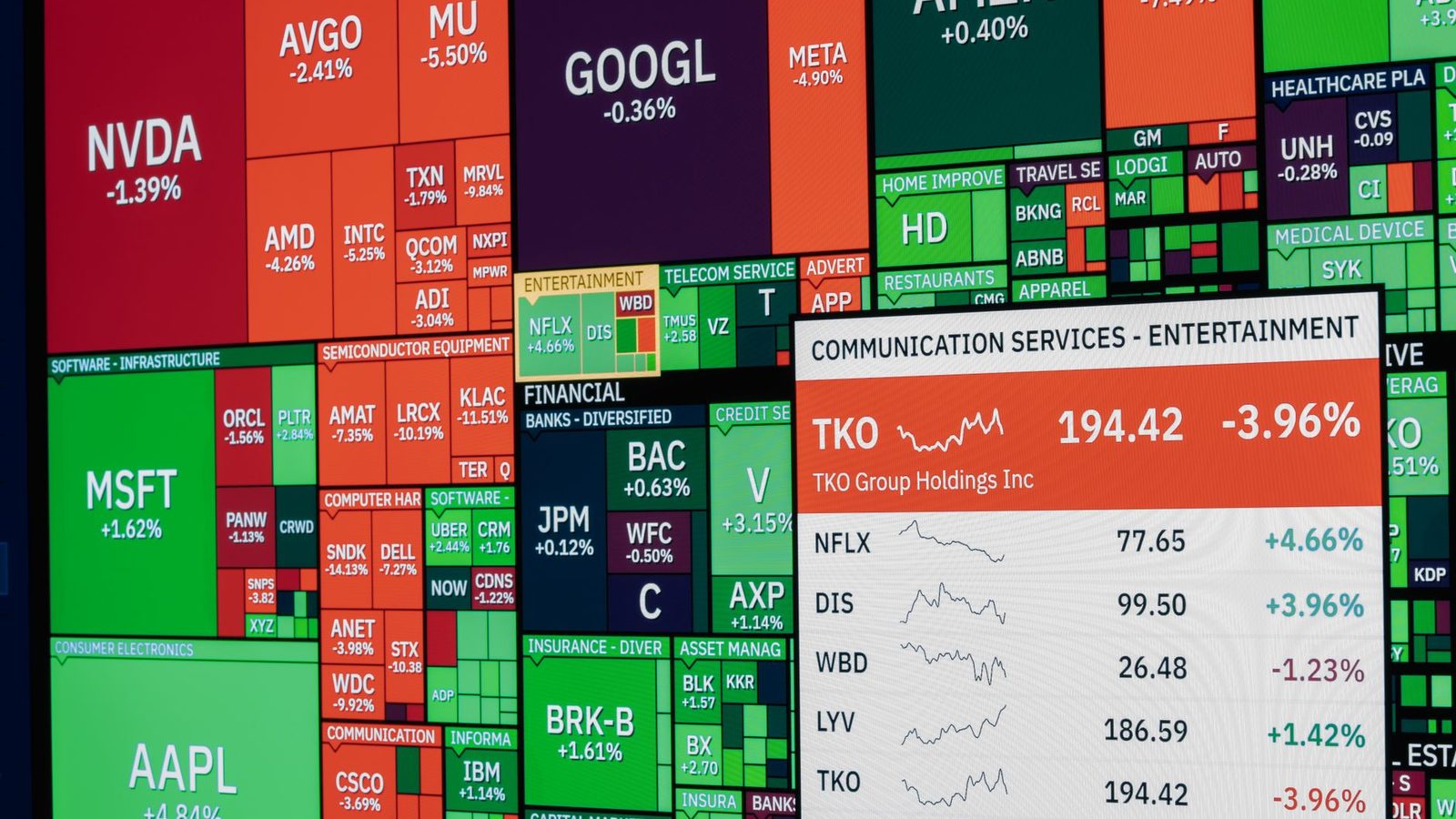
Consensus is arguing about whether these valuations are justified. That is the wrong question, or at least the less urgent one. The more urgent question is what happens to correlation once these names are public and included in indices alongside Nvidia, Microsoft, and the rest of the incumbent AI trade. The Magnificent Seven already represent close to a third of the S&P 500's market capitalization. Adding several new mega-caps drawing on the same capex cycle, the same power constraints, and in some cases the same customer and investor relationships does not diversify that concentration. It deepens it.
There is a further wrinkle that public filings will not be able to paper over. Much of the current AI capital cycle runs on overlapping vendor financing and equity stakes between chipmakers, cloud providers, and model companies. Once Anthropic and its peers are subject to quarterly disclosure, the circularity in those revenue and investment relationships becomes visible in a way private status has shielded it from. A derivatives book built around dispersion, the relative pricing between an index and its components, gets far more interesting once three new, highly correlated names sit inside that index alongside the exposures that already fund and are funded by them.
The honest counter-case
None of this requires anything to go wrong. If AI-driven earnings growth continues to broaden across sectors, the added supply of tradable AI equity could simply distribute risk that was previously locked in private markets, which is a healthier outcome for public investors, not a worse one. New listings can also relieve pressure on incumbent names by giving capital somewhere else to go. The bear case here is a structural one about concentration and correlation, not a claim that any of these listings will fail.
What I am watching
I am watching whether these three listings land inside the same quarter or get staggered, because staggering changes the liquidity absorption problem materially. I am watching early options positioning on each name for signs that skew is being driven by flow rather than view. As Komey Tetteh, running delta-neutral volatility books, the question I keep coming back to is not whether these companies deserve their valuations. It is whether the market has any tool built for pricing three correlated mega-caps entering at once. Do you know how much of your own AI exposure already sits concentrated in names that are about to get company?
Common questions
Has Anthropic actually chosen Nasdaq for its IPO?
Yes. Anthropic PBC has selected Nasdaq as its listing venue ahead of a potential initial public offering, with the listing targeted for as soon as October 2026, according to reporting citing a person familiar with the matter.
What is Anthropic's valuation ahead of its IPO?
Anthropic's last reported private valuation stood at approximately $965 billion, with the company reportedly seeking to raise as much as or more than SpaceX did in its own record-setting offering.
Did SpaceX already IPO on Nasdaq?
Yes. SpaceX listed on Nasdaq under the ticker SPCX in June 2026, priced at $150 per share, and its market valuation subsequently rose above $2 trillion, making it the largest IPO in history at the time.
Is OpenAI also planning an IPO around the same time?
Multiple reports indicate OpenAI has also been preparing a Nasdaq listing targeted for around October 2026, at a valuation reportedly in the hundreds of billions of dollars and potentially higher, meaning several major AI companies could reach public markets in a similar window.
Why does it matter that multiple AI companies list at the same time?
When several large, highly correlated companies from the same sector enter public markets in a compressed window, index funds, options markets, and single-stock derivatives all have to absorb that new supply simultaneously, which changes liquidity, correlation, and hedging dynamics across the market rather than just adding new tickers to trade.
Does this affect existing AI stocks like Nvidia or Microsoft?
New public AI issuance does not change those companies' underlying business fundamentals directly, but it can affect how much attention, capital flow, and derivatives positioning is directed toward the AI trade as a whole once investors have several large, tradable pure-play options instead of concentrating exposure through a handful of incumbents.